Community Spotlight: Esteban Salmón, Postdoctoral Research Associate
Rethinking Justice: How Human Rights Reforms Transform State Violence
When Mexico's president declared a "War against Drug Cartels" in 2006, the country embarked on a paradoxical journey. Even as state violence intensified, the criminal justice system underwent sweeping human rights reforms designed to protect citizens. For anthropologist Esteban Salmón, this raised an important question: How could strong human rights protections exist alongside widespread state violence?
Salmón’s research with prosecutors and communities targeted by the justice system in Mexico City offers an unsettling insight. Stronger human rights protections don't necessarily eliminate state violence—sometimes they only transform it, especially when institutions lack the capacity building to catch up with the reforms.
"The reform successfully reduced the use of torture and beatings to extract confessions," Salmón explains, "but it also led to increased reliance on planted evidence." Without adequate resources or training in investigations, prosecutors and police officers in challenging working conditions have turned to other methods to secure convictions—with evidence tampering that undermines the spirit of reform.
This finding, published recently in an article with Stanford Political Science Professor Beatriz Magaloni, illustrates a central theme in Salmón's scholarship: the gap between democratic ideals and institutional realities.
From the classroom to the field
Salmón's approach to research was shaped early by an unconventional first fieldwork experience. As a college student, he taught adult peasants to read and write in the highlands of central Mexico through a popular education project inspired by Brazilian educator Paulo Freire. Freire's emphasis on dialogue between equals left a lasting impression.
"He has a phrase I like: 'No one ignores everything, and no one knows everything. That is why we are always learning,'" Salmón reflects. "It might sound silly, but saying it out loud can create a sense of equality even in deeply unequal learning encounters."
That classroom experience became the foundation for his first book, which examines how remittances from the United States reshape community dynamics in transnational villages. The book grew directly from what Salmón learned from his students.
Today, he brings that same ethos to his teaching and fieldwork. "I approach ethnographic fieldwork and the classroom as spaces of encounter where we learn from each other.”
Lessons from fieldwork: confronting punitive populism
One fieldwork encounter inspired and shifted Salmón's perspective on criminal justice. He arrived with views heavily influenced by abolitionist scholarship from the United States, but working with prosecutors and a community experiencing high rates of both incarceration and crime complicated his perceptions.
"I realized how mass punishment is largely driven by social demands for violent retribution against offenders," he explains. What academics sometimes dismissively call "punitive populism" is often closely tied to democratic processes. Excessive punishment, Salmón argues, is “not necessarily an anomaly of democracy” but a result of it. Law enforcement agents punish offenders while most of the population supports that punishment.
What struck Salmón most was a phrase repeated by many people he interviewed—individuals who had been imprisoned in terrible conditions and suffered the harshest consequences of state punishment. They described their experiences by saying: "I would not wish it even to my worst enemy."
"I saw this phrase as a guiding principle," Salmón shared. "Today's punishments are so extreme that it is difficult to justify them even for the worst kinds of wrongdoing."
Advice: Building ethics from the ground up
For students interested in research, justice reform, or anthropology, Salmón offers advice he received before beginning his own fieldwork: suspend moral judgment until you truly understand what you're observing.
"Sometimes, our preconceived ideas of what is good or bad can prevent us from truly understanding what we observe," he notes. "The researchers, reformers, and anthropologists I admire most are very inductive in their approach—they build their ideas from empirical observations instead of applying preconceived frameworks to what they find."
The challenge, he adds, comes afterward: creating new ethical frameworks from what you've learned, even when those ethics don't fit neatly into established categories. "That forces you to be creative,” he suggests.
The researchers, reformers, and anthropologists I admire most are very inductive in their approach—they build their ideas from empirical observations instead of applying preconceived frameworks to what they find.
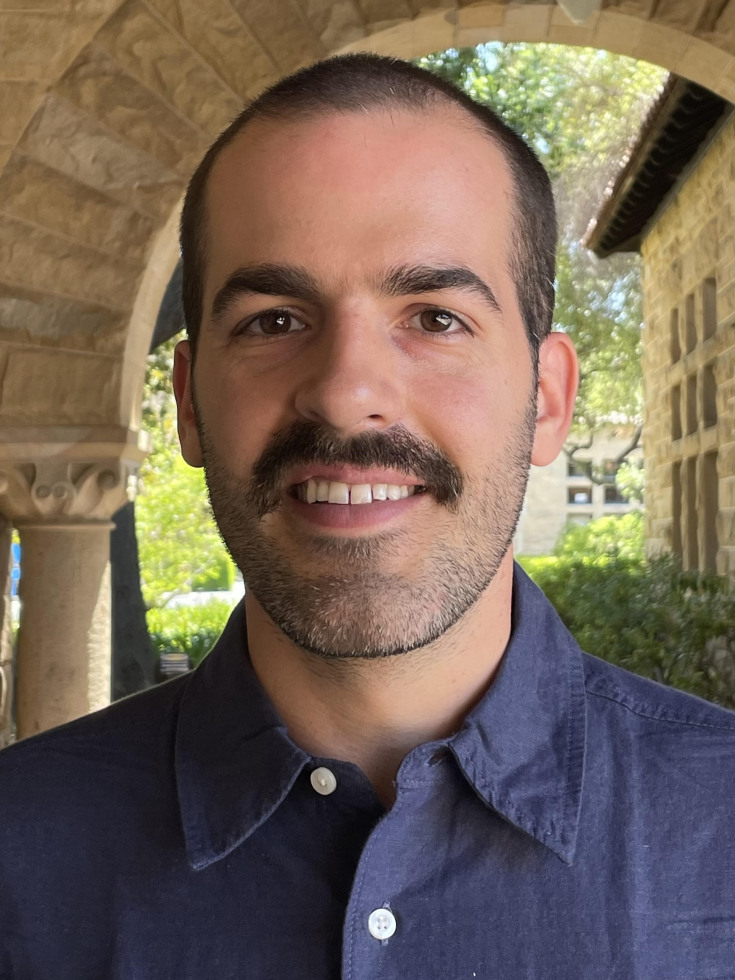
Esteban Salmón is a Postdoctoral Research Associate in International and Public Affairs at Brown University. He holds a PhD from Stanford University. Beyond his scholarly publications, he writes essays and reviews for Sapiens, Nexos, and Letras Libres on topics ranging from criminal prosecution and video surveillance to true crime and transnational migration.