Skip to Main Content
Brown University
Brown University

Center for Human Rights and Humanitarian Studies

Search Menu

Site Navigation

  • Home
  • About
    • Director's Letter
    • People
    • Annual Reports
  • Research
    • Core Research
    • Seed Grants
    • Affiliated Faculty Research
    • Publications
  • Opportunities
    • For Students
    • For Faculty
    • Visiting Scholar Program
  • Education
    • Courses
    • Hack for Humanity
    • Student Clinic for Immigrant Justice (SCIJ)
    • Student Internships
  • Events
    • Upcoming Events
    • Event Archive
    • Webcasts
  • News
    • In the News
    • Community Spotlight
Search
Center for Human Rights and Humanitarian Studies

Hack for Humanity 2026: Mis/Disinformation

Hack for Humanity 2026: Mis/Disinformation

About Hack for Humanity

Organized by the Center for Human Rights and Humanitarian Studies, Hack for Humanity is an annual humanitarian-focused project competition at Brown University that brings together students to learn about the most pressing needs in the human rights and humanitarian sphere. This year’s competition will focus on the theme of mis/disinformation and will take place November 7-8. Students will collaborate over two days to design innovative social programs and policies, legal systems, projects, or technologies that address this challenge. 

The winning team is eligible to receive a $3,000 seed grant.

Sign up your team here

Premise

Misinformation and disinformation spread faster and farther than ever, eroding trust in public institutions, science, and one another. Far from being a purely online issue, false and deceptive information fuels real-world harm—undermining public health campaigns, driving political polarization, exploiting vulnerable populations, and weakening democratic processes worldwide.

Stopping the spread of false information isn't just a technical challenge; it requires a coordinated response across technology, policy, media literacy, and community organizing. Effective solutions must go beyond basic fact-checking to address why people fall for misleading narratives in the first place. 

Objective

This year’s hackathon will focus on how to better prepare for, identify, and respond to misinformation and disinformation. Students will collaborate over two days to design innovative programs, systems, or policies that address this challenge. Potential areas of focus include strengthening media literacy and critical thinking, combating health and scientific misinformation, curbing election interference and political manipulation, detecting deepfakes and AI-generated content, protecting vulnerable groups from targeted scam campaigns, building community-level networks, and holding digital platforms accountable. 

Please note: You do not need coding or technical experience to participate—your team’s pitch could take the form of a social program, educational campaign, policy proposal, technology concept, or other innovative approach to addressing misinformation and/or disinformation.

While your team has the flexibility to explore any aspect of misinformation and disinformation, we have provided a list of potential subtopics to help guide your focus. It will also be important to incorporate cross-cutting issues—such as equity, justice, human rights, and community resilience—as you develop your project pitch.

Potential Subtopics to Consider

Research and Reports

  • OHCHR Freedom of Opinion and Expression Mandate
    • Access reports evaluating state responses to online disinformation and their compatibility with international human rights law
  • Elections in Digital Times: A Guide for Electoral Practitioners 
    • UNESCO's handbook detailing how social media, micro-targeting, and online harassment affect election integrity and voter rights
  • Brennan Center for Justice: Election Misinformation Project
    • The Brennan Center for Justice's resources and recommendations for election misinformation and the consequences for democracy.
    • Expert Brief: Does AI Fight or Fuel Election Disinformation?
  • International IDEA Electoral Processes Theme
    • Comprehensive research, datasets, and practical guidelines on information integrity, cybersecurity, and digital threats to democratic elections

Research and Reports

  • WITNESS
    • Leading international research project focusing on the intersection of deepfakes, disinformation, and real-world human rights documentation
  • Access Now
    • Global digital rights authority defending marginalized communities from the harms of synthetic media, advocating against AI, and protecting information integrity worldwide
  • Preliminary Report of the Independent International Scientific Panel on AI (UN Report)
    • First global, multilateral scientific assessment mapping the accelerating capabilities, systemic risks, and governance gaps of artificial intelligence to establish a shared evidence base for international policy
  • UN Office of Counterterrorism: Practice Guide on Artificial Intelligence
    • Operational framework equipping global security officials and law enforcement with practical strategies to detect and prevent the exploitation of artificial intelligence technologies by terrorist groups

Research and Reports

  • World Health Organization: Disinformation and Public Health Policy Q&A
  • Health Feedback
    • Global fact-checking network leveraging crowdsourced medical and scientific experts to review viral health claims, combat medical misinformation, and promote evidence-based information online
  • American College of Physicians: Fighting Medical Misinformation and Disinformation
  • Public Health Collaborative
    • Centralized resource hub providing evidence-based messaging guidance and real-time misinformation tracking to help public health officials deliver clear, accurate information to local communities
  • International Peace Institute: The UN’s Response to the COVID-19 Infodemic
    • Comprehensive policy study analyzing strategies to counter health-related disinformation, evaluate communication frameworks, and strengthen institutional resilience against global information crises

Research and Reports

  • Climate Action Against Disinformation
    • Global coalition monitoring systemic climate disinformation campaigns orchestrated by corporate interests to sabotage environmental policy and undermine international climate negotiations
  • UNDP Climate Promise: What are climate misinformation and disinformation and how can we tackle them?
  • DeSmog: Climate Disinformation Database
    • Comprehensive research repository systematically tracking and exposing the PR tactics used by individuals and organizations to stall action on global climate change.
  • Environmental Defense Fund: Battling climate myths and fighting for the truth

Research and Reports

  • UNICEF Office of Research: Digital misinformation/disinformation and children: 10 things you need to know
  • UNESCO Media and Information Literacy Hub
    • Global initiative equipping individuals with critical thinking skills to critically evaluate content and safely navigate digital information environments
  • 5Rights Foundation
    • Advocacy organization driving systemic change to enforce digital rights, online safety standards, and structural accountability to protect children and young people across digital environments
  • Joan Ganz Cooney Center
    • Independent research and innovation lab dedicated to fostering digital literacy for children in a rapidly evolving digital world.

Cross-Cutting Themes

As misinformation and disinformation continue to spread, their social, economic, political, legal, and cultural effects are felt across all sectors of society. Even so, these effects are not evenly distributed. Digital manipulation and misleading content disproportionately harm the most vulnerable members of the global community, including but not limited to racial and ethnic minorities, non-native language speakers, low-income populations, older adults, and other disadvantaged or marginalized groups.

We ask that your team take these following issues into consideration as you work on your project pitch to ensure your solutions are inclusive and reach those that are disproportionately affected by misinformation and disinformation.

Keynote Speaker

  • Man in white button down shirt smiling in front of the ocean.

    Jonathan Corpus Ong

    Professor of Communication in the University of Massachusetts at Amherst

    Jonathan Corpus Ong is Professor of Communication in the University of Massachusetts at Amherst. He is co-author of the study “Architects of Networked Disinformation: Behind the Scenes of Fake News Production in the Philippines”, cited as among the “most valuable” research in disinformation studies by the Poynter Institute. He is Executive Director of Sigla Research Center, an NGO that pursues sociological and community-driven research in the tech and democracy space.

Mentors

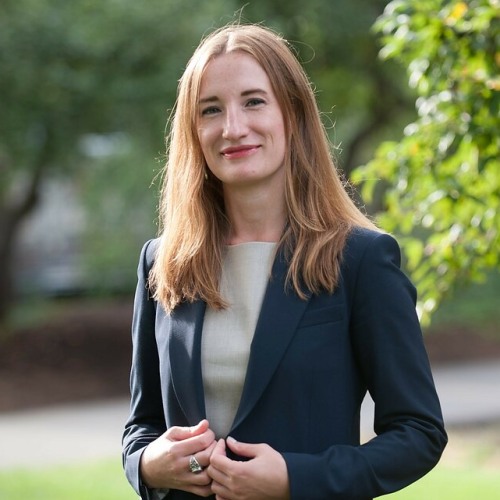
  • Woman in blazer smiling.

    Ieva Jusionyte

    Director, Center for Human Rights and Humanitarian Studies, Watson Family University Professor of International Security and Anthropology

Evaluation Framework

OriginalityProvides a fresh approach to the challenge or utilizes innovative methods.
Respect for Individuals/CommunitiesAimed at addressing needs as defined by the people who are most impacted, and protects the privacy and rights of individuals. 
ContextLeverages existing local resources and knowledge. Respects indigenous material and improvised solutions and either builds upon those or considers them in design.
FeasibilityConsiders logistics of delivery and access, including political, cultural, technological, educational, and infrastructure requirements for delivery and use. 
ImpactHas the potential to make a significant difference in people's lives. Also considers questions of cost vs. benefits, i.e. resources required to produce and deliver solution vs. benefits to individuals. 
SustainabilityRespects relevant time frame for the context, matching the duration of solution to the likely duration of the need. 
PartnershipsConsiders relevant stakeholders and partners, including local and international as well as private and public. Considers how relevant organizations would be involved in use or delivery.

The main purpose of a pitch presentation is to show your proposed solution as an innovative, feasible project. Working along each of the components of the rubric is the key to having a successful pitch, though students may structure their presentation in any way that is appropriate. For the originality and impact sections, presenting the problem statements and mission statements to show the necessity of the project is often a useful task. Additionally, through research students can find specific data regarding the impact and feasibility of the project, including cost projections, existing infrastructure, and/or necessary technology for the proposed solution. Thoroughly covering each of the sections in the rubric is key to a successful pitch in this event.

Brown University
Providence RI 02912 401-863-1000

Quick Navigation

  • Visit Brown
  • Campus Map
  • A to Z
  • Contact Us

Footer Navigation

  • News
  • Events
  • Campus Safety
  • Accessibility
  • Jobs at Watson
Give To Brown

© Brown University

Brown University
For You
Search Menu

Mobile Site Navigation

    Mobile Site Navigation

    • Home
    • About
      • Director's Letter
      • People
      • Annual Reports
    • Research
      • Core Research
      • Seed Grants
      • Affiliated Faculty Research
      • Publications
    • Opportunities
      • For Students
      • For Faculty
      • Visiting Scholar Program
    • Education
      • Courses
      • Hack for Humanity
      • Student Clinic for Immigrant Justice (SCIJ)
      • Student Internships
    • Events
      • Upcoming Events
      • Event Archive
      • Webcasts
    • News
      • In the News
      • Community Spotlight
All of Brown.edu People
Close Search